
💡 The Plain-English Definition
In Bitcoin markets, a “whale” is an entity holding an extremely large amount of bitcoin — usually defined as 1,000 BTC or more. Whales draw attention because their potential selling could, in theory, move the market significantly. In practice, the picture is more complicated.
🤔 But Why Though?
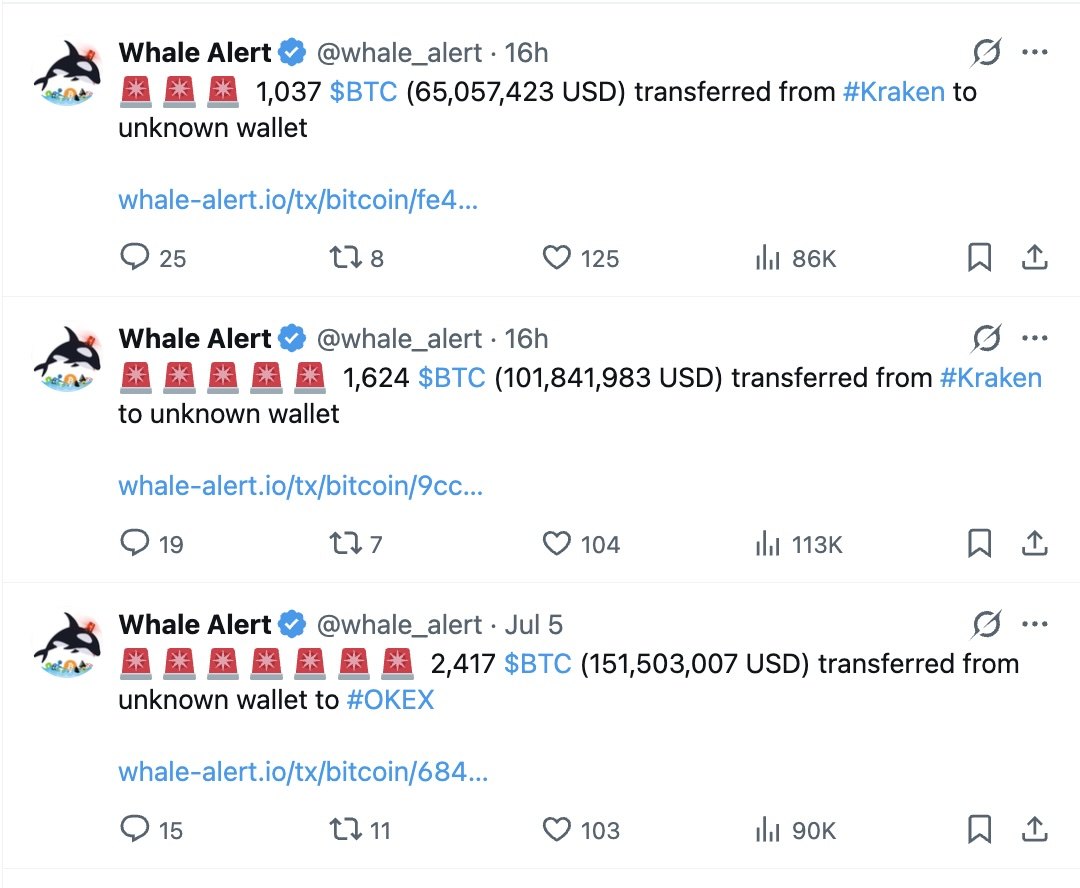
A holder with 1,000 BTC at $70,000 each controls $70 million of bitcoin. A holder with 10,000 BTC controls $700 million. In any market, an entity controlling that share of the available supply could in theory move prices by buying or selling in bulk — especially in a market with less depth than traditional stocks or bonds. That’s why whale wallet movements get tracked obsessively: a large transfer of bitcoin onto an exchange is read as a possible incoming sell, and a large transfer off an exchange into cold storage is read as a possible sign of accumulation.
The “whale manipulation” story deserves some scepticism, though. Bitcoin’s liquidity has grown dramatically over fifteen years — billions of dollars trade daily across hundreds of venues worldwide. As institutional participation has grown, the ability of any single entity to meaningfully and persistently manipulate such a deep market has shrunk.
It also helps to distinguish two kinds of whale. The old whales — holders from Bitcoin’s first years, often miners who accumulated thousands of BTC when prices were negligible — tend to be long-term holders who rarely transact. The new institutional whales — public companies, ETFs, sovereign wealth funds that entered after the 2024 spot-ETF approvals — are constrained by their duty to answer for their decisions and by public disclosure rules, both of which limit manipulative behaviour. On-chain analysis (reading blockchain data to understand holder behaviour) can identify whale activity with reasonable accuracy, especially for known exchange wallets and major public companies that have disclosed their holdings.
🌍 The Real-World Analogy
Think of whales like the largest landlords in a city’s property market. They own so much of the available housing that their decisions — sell, hold, develop — sway prices for everyone else. But as the city grows and more capital enters, even the biggest landlords hold a smaller share of an ever-deeper market. Their influence fades not because they sold, but because the market grew around them.
⚡ So What?
Whale-watching is most useful as a sentiment indicator, not a trading signal. Sustained outflows from known exchange wallets into self-custody (accumulation) send a different message than sustained inflows (preparing to sell). For long-term holders using DCA (Dollar-Cost Averaging — buying a fixed amount on a regular schedule regardless of price), whale activity is background context — interesting, but not a reason to abandon a steady accumulation plan.