
💡 The Plain-English Definition
A full node is a computer that downloads every Bitcoin block and transaction ever recorded, checks each one against Bitcoin’s rules for itself, and keeps its own complete copy of the blockchain. It doesn’t trust anyone else’s version of the truth — it verifies everything itself.
🤔 But Why Though?
When you use a Bitcoin wallet on your phone, it usually doesn’t store the entire blockchain. Instead it asks a third-party server what your balance is — and you’re trusting that server to tell you the truth. A full node removes that trust completely: it holds the complete record and checks everything itself.
This matters deeply for how Bitcoin stays secure. Bitcoin’s rules — the 21 million supply cap, the limit on block size, the halving schedule that cuts the mining reward every four years — aren’t enforced by developers or by miners. They’re enforced by every node independently checking each new block. A miner who builds a block that breaks a rule — say, paying themselves 100 BTC instead of the allowed 3.125 — finds that block rejected by every full node, and all that work is thrown away. This is what makes the rules so hard to change: you’d have to convince the vast majority of the world’s independent node operators to accept new rules at the same time.
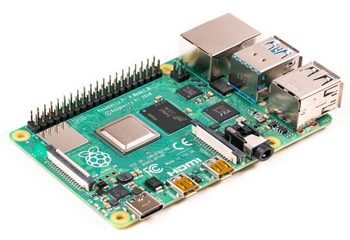
Running one is quite doable. As of 2026 the Bitcoin blockchain takes up roughly 600 gigabytes, so a full node needs enough storage (a 1–2 terabyte drive is comfortable), a stable internet connection, and a computer that can stay online most of the time. It also needs an initial sync — downloading and verifying the entire history — which takes anywhere from a few hours to a few days, depending on the hardware. Cheap single-board computers like the Raspberry Pi have put home node operation within reach of enthusiasts, without tying up a full computer.
It’s worth being clear on how this differs from mining. Miners produce new blocks: they do the proof-of-work — the costly computation — and earn the block reward. Full nodes check blocks and enforce the rules, but they don’t mine and earn no bitcoin for running. Nodes are the referees; miners are the players.
🌍 The Real-World Analogy
A full node is like personally auditing every transaction in a company’s books instead of relying on an accountant’s summary. The accountant — a third-party server — might be right, but they might also make errors, be compromised, or misreport. The auditor — the full node — doesn’t take their word for it and checks every line itself. The value isn’t only accuracy; it’s independence. Each independent auditor makes the whole system harder to corrupt.
⚡ So What?
Running a full node is the fullest expression of “verify, don’t trust” in Bitcoin. It gives you complete certainty about your own balance without trusting any third party, it helps keep the network decentralised (spread across many independent participants), and it protects your privacy, since your transactions don’t pass through a company’s servers. Most people don’t need one — a hardware wallet with good privacy habits is enough for most holders. But for anyone who wants full control over their own money and is willing to put in the setup effort, a full node is the gold standard.