💡 The Plain-English Definition
Mining is how new Bitcoin transactions get checked, bundled into blocks, and added permanently to the blockchain. For each block they complete, miners earn the block reward — newly created bitcoin plus the transaction fees from that block.
🤔 But Why Though?
Mining answers a basic question: who gets to add the next page to Bitcoin’s permanent ledger, and how do we stop them from cheating? The answer is proof-of-work, the costly computing that miners do to earn that right. To add a block, a miner must find a hash below a certain target number, and the only way to find it is to try billions of times per second. It is like searching for a lottery ticket with one specific number by buying tickets one at a time, billions per second. The first miner to find a valid hash wins the right to add the next block and collect the reward.
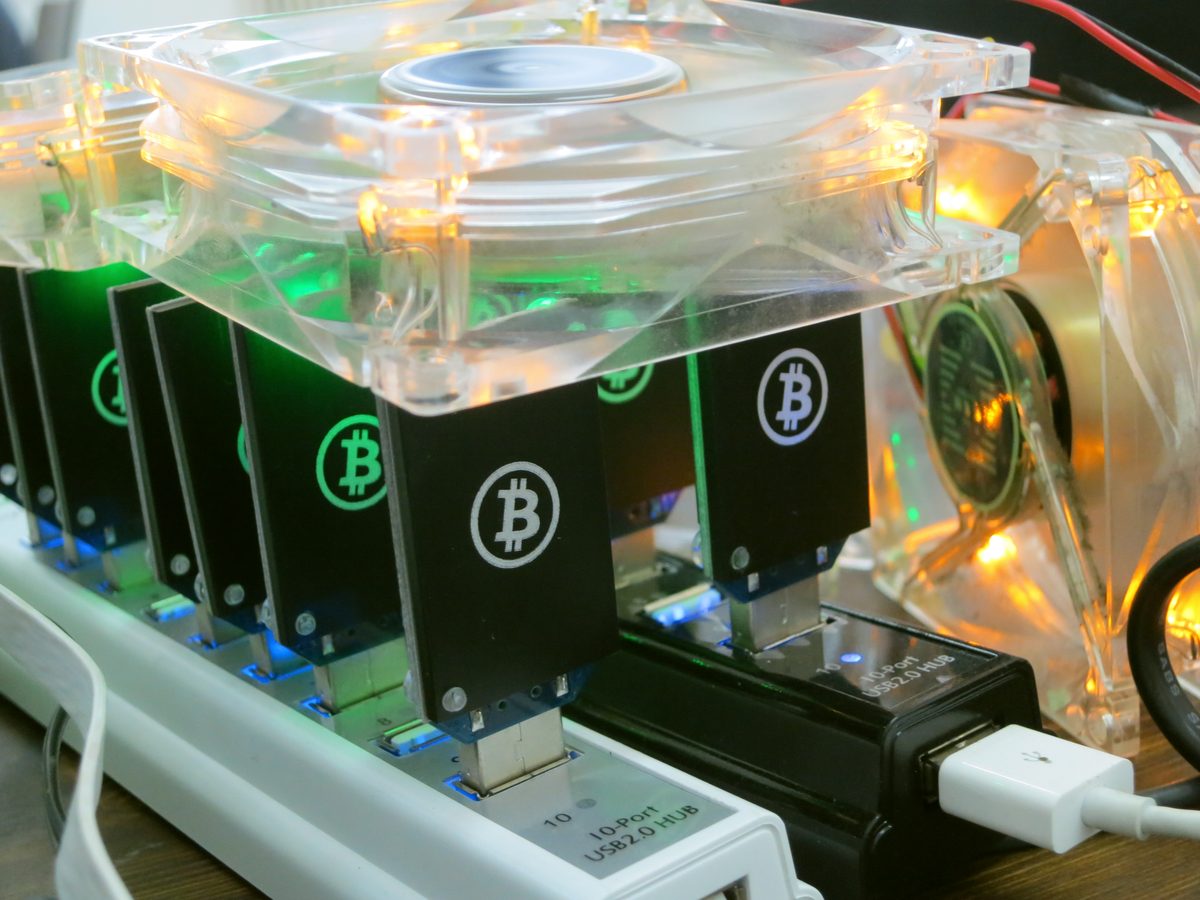
Here is what that looks like in practice. A miner collects unconfirmed transactions from the mempool — Bitcoin’s waiting room for transactions that have not yet been added to a block. It chooses which ones to include, and prefers the ones that pay the highest fee for their size. It puts them together into a candidate block. Then it hashes the block’s header over and over, changing the nonce each time — a small number in the header whose only job is to be changed — to get a fresh hash, searching for one that falls below the target. Today this runs on ASICs (chips built only for Bitcoin’s SHA-256 hashing, far faster than any ordinary computer), usually inside mining pools (groups that combine their power and share the rewards) rather than alone.
The economics are simple: a miner’s electricity must cost less than the rewards it earns. So miners set up wherever power is cheapest — historically hydropower in places that make more electricity than they can use. After China banned mining in 2021, the industry spread out across North America, Central Asia, and South America.
The environmental debate is real on both sides. Bitcoin mining does use a lot of energy. But much of that energy comes from power that would otherwise be wasted, such as renewable energy in remote places with no other buyer. And the energy use is not a side effect; it is what makes the system secure — the cost that makes the ledger trustworthy.
Geographic spread matters too. Mining concentrated in one country is a political risk, because a single government could pressure it. The 2021 China ban tested this: even with about half the network’s computing power suddenly gone, the network recovered within months.
🌍 The Real-World Analogy
Think of mining like a city-wide competition where thousands of people search a huge warehouse for one specific rare coin, each searching a different section at the same time. Whoever finds it first wins the prize. The warehouse is so large that finding the coin takes billions of searches per second. And the prize is only worth it if your searching is efficient — the fastest searcher with the lowest running costs wins over time. Bitcoin mining is that competition, run every ten minutes, with the warehouse reset each round.
⚡ So What?
Mining is what makes Bitcoin’s ledger trustworthy without a central authority. Understanding it explains why Bitcoin uses energy (that is the security cost), why hash rate — the total computing power aimed at mining — matters (more of it means a network that is harder to attack), and why the health of the mining industry matters to every holder. A thriving, geographically spread-out mining industry is evidence that Bitcoin’s security can support itself.