💡 The Plain-English Definition
Proof-of-work is how Bitcoin decides who gets to add the next block, with no central authority in charge. To add a block, a miner must spend real computing energy to find a valid hash — a specific fingerprint number that is hard to find but easy for everyone else to check. It turns physical effort into voting power, and makes cheating cost more than being honest.
🤔 But Why Though?
Bitcoin needed a way to decide who adds the next block to the ledger — with no central authority making the choice. Whatever the rule was, it had to resist cheating. If adding blocks were free, anyone could fill the network with fake ones. If it worked by voting, one person could create millions of fake identities and control the vote. Proof-of-work avoids both problems by requiring the one thing you cannot fake: real energy spent.
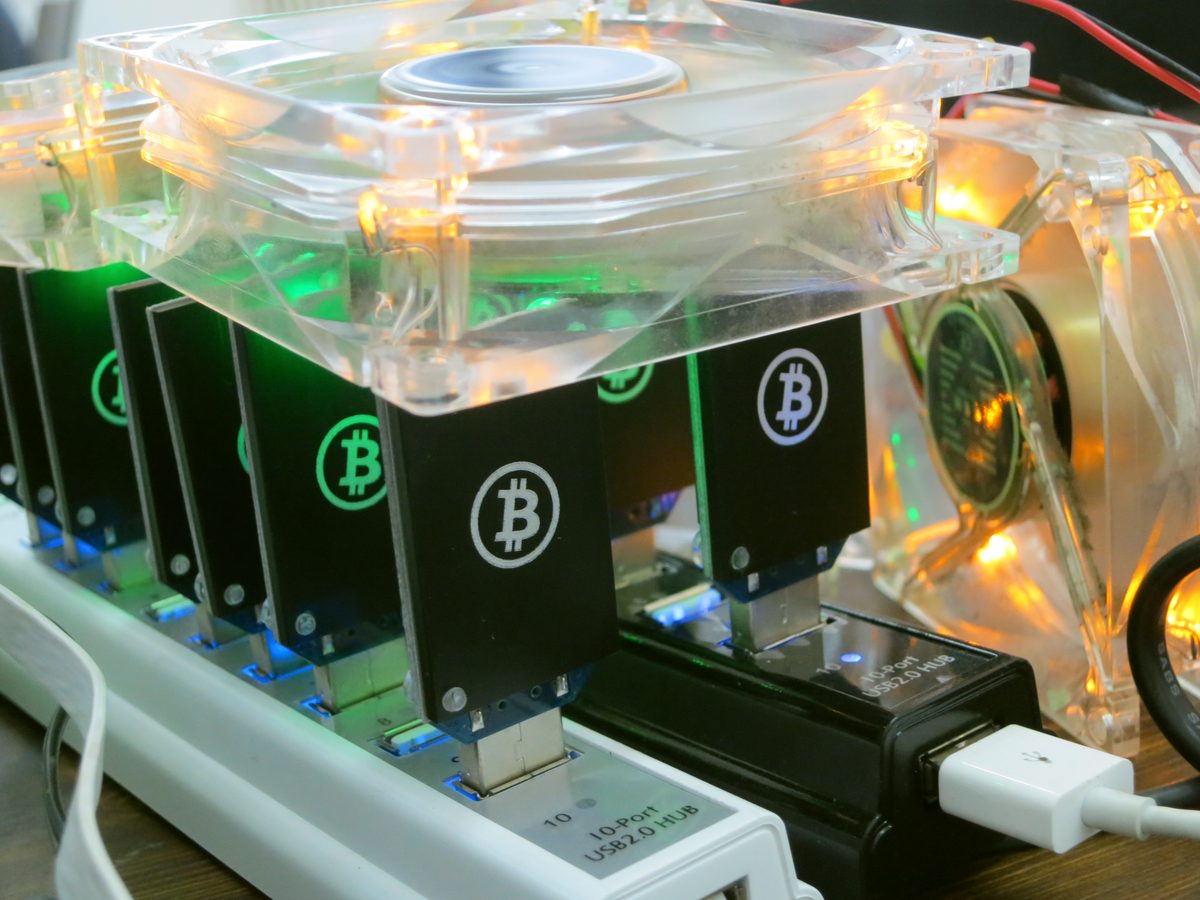
To add a block, a miner must find a hash that lands below a certain target number. The hash is the output of SHA-256 (run twice), the fingerprinting function Bitcoin runs on the block’s header. These outputs are unpredictable, so there is no shortcut. The only way to find one is to try billions of variations per second until one works. Every attempt uses electricity. That spent energy is real, anyone can check it, and it cannot be faked — which is exactly what makes it an honest proof of effort.
It is worth explaining the main alternative, proof-of-stake. This is the system Ethereum and others use, where your voting power depends on how much cryptocurrency you have locked up. Proof-of-stake ties voting power to wealth already inside the system. Critics say this is circular — the coins secure the system, and the system creates the coins — and that it gives the most control to those who already hold the most coins. Proof-of-work instead ties voting power to energy spent in the real world. It connects the digital system to a real-world resource that you actually have to spend.
The energy objection is fair: the network really does use a lot of electricity. The honest answer is that this energy is the price of running a trustless global money with no one in charge. Every security system has a cost. Bitcoin’s cost happens to be electricity, rather than armies of guards or teams of lawyers.
🌍 The Real-World Analogy
Think of proof-of-work like an application process where each candidate must hand in a finished, verified research project — months of work that cannot be faked. You cannot just claim you did the work; the finished project is the proof. Whoever hands in correct, complete work first wins the place. Each Bitcoin block is that research project: proof of real computing effort, submitted by the miner who finished first.
⚡ So What?
Proof-of-work is why Bitcoin’s ledger can be trusted without anyone trustworthy maintaining it. The cost of producing each block is what pays for that block’s security. This is why Bitcoin uses energy at all — the energy is doing a specific, essential job. It is also why “just switch to proof-of-stake” is not a simple swap: it would change Bitcoin’s whole security model, in ways its community believes would make Bitcoin weaker.