💡 The Plain-English Definition
The Byzantine Generals Problem is a classic computer-science puzzle: how can a group of independent parties reach agreement when they can’t trust each other, and some of them may be lying? For decades it was considered unsolved without a central authority. Bitcoin was the first system to crack it — which is exactly what made digital money without a middleman possible.
🤔 But Why Though?
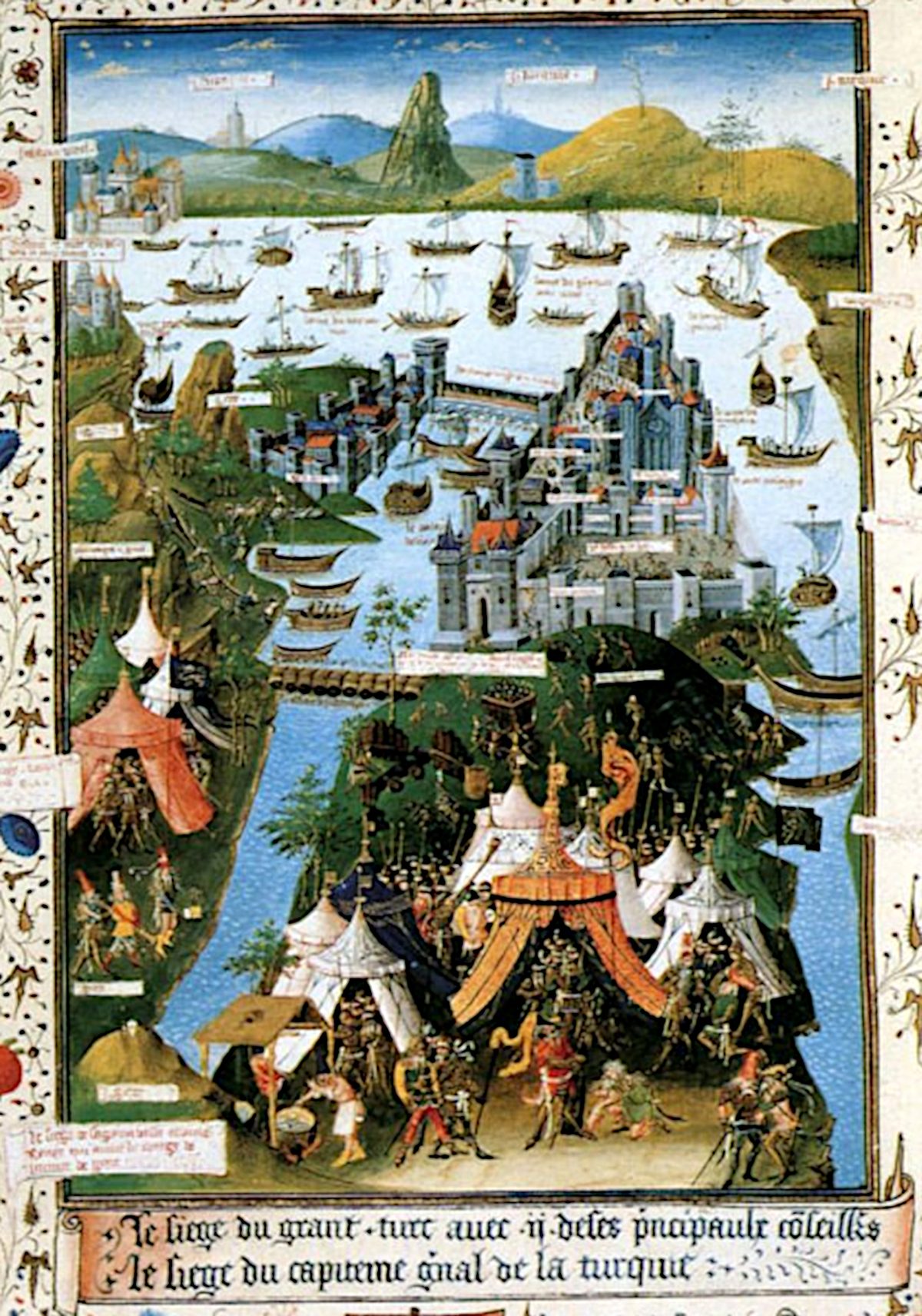
Picture several armies surrounding an enemy city. The generals can only win if they all attack at the same moment — a half-hearted, partial attack fails. But they can only talk by messenger, some of the generals might be traitors sending fake orders, and there’s no way to know in advance who’s loyal. So how do the honest generals agree on a plan they can act on together?
Computer scientists formalised this in 1982, and for decades it was considered a fundamental roadblock for distributed systems — any setup where many computers have to agree on one shared truth, with no one in charge.
It maps straight onto digital money. When strangers have to agree on who owns what, there are only two ways it can go: they trust a middleman to keep the record straight, or the system falls apart the moment someone dishonest tells different parts of the network different things.
Bitcoin’s answer was proof-of-work — the rule that adding to the ledger requires doing real, expensive computation. To make a claim (“this transaction happened”), you have to burn genuine effort. To send two conflicting claims to different parts of the network, you’d have to do that costly work twice — which isn’t worth it. And as long as honest miners are putting in more total work than any dishonest group, they always build the longer chain — which the network treats as the truth.
The real elegance is that you never need to identify the traitors — you don’t need to trust anyone at all. You just follow the chain with the most work piled up behind it.
🌍 The Real-World Analogy
Imagine instead of messengers, the generals send orders stamped with a seal that requires an hour of complex hand-carving to produce. You can't forge a seal in minutes, and you can't produce two different seals in the time it takes to carve one. If someone sends you a sealed order, you know they spent real effort on it. If you receive two conflicting orders, you trust the one with more accumulated seals behind it — because producing more seals requires more honest effort than any traitor can fake.
⚡ So What?
This is why computer scientists — not just economists — saw Bitcoin as a genuine breakthrough. Getting strangers who don’t trust each other to agree, with no central authority, had been an open problem for decades. So when someone asks “but who do you actually trust?”, the honest answer is: no single person or institution — because the system is built so that cheating costs more than playing fair.